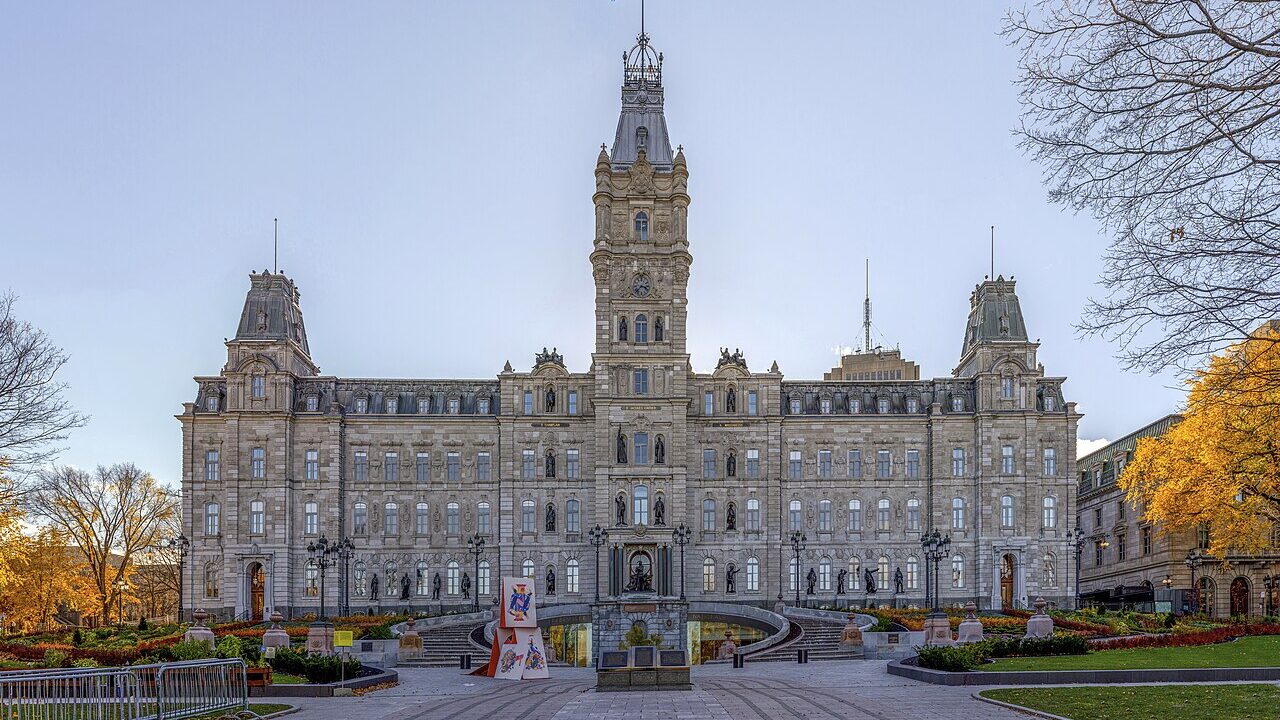
The separatist Parti Québécois has won a Canadian provincial election for the first time in twelve years, taking 59 of the 127 seats in Quebec’s National Assembly and forming a minority government, according to results reported from the province. Party leader Paul St-Pierre Plamondon marked the victory with a vow to hold a referendum on Quebec’s independence from Canada.
The result reshapes politics in Canada’s second-most populous province and guarantees that the sovereignty question — largely dormant in provincial politics for a generation — returns to the center of the agenda. The Parti Québécois campaigned on a promise to hold a referendum during its mandate, and its leader repeated that commitment on election night despite polls consistently showing that a majority of Quebecers do not currently support secession.
That gap between the commitment and public opinion defines the politics ahead. A minority government must govern with support from other parties that oppose a referendum, which means the sovereignty timetable will be contested at every step. Federal officials in Ottawa, who would face the constitutional and economic consequences of a Yes vote, have so far responded with studied calm, emphasizing the clarity rules that govern any future referendum question and result.
For Quebec voters, the immediate consequences are more ordinary: a new government with a program on language, immigration and public services that it must now steer through a legislature it does not fully control. Business groups have urged stability, noting that referendum uncertainty has historically weighed on investment in the province.
Quebec has voted on sovereignty twice before, in 1980 and 1995, rejecting independence both times — the second by barely a percentage point. Whether a third vote materializes will depend on parliamentary arithmetic, public opinion and the new government’s choices. What the election has already settled is that the question is back.
The result also recalibrates federal politics. Ottawa must now deal with a Quebec government elected explicitly to reopen the national question, led by a politician who has made the referendum the measure of his mandate. The other provincial parties, humbled at the ballot box, face their own reckonings about what they offer voters who have tired of managerial politics. And in the rest of Canada, the reaction so far — weary familiarity rather than alarm — may itself be a political fact: a country that has lived with the sovereignty question for half a century knows how to file it, provisionally, under “to be negotiated.” Whether that calm survives an actual referendum campaign is another matter, and a question for a later round.