
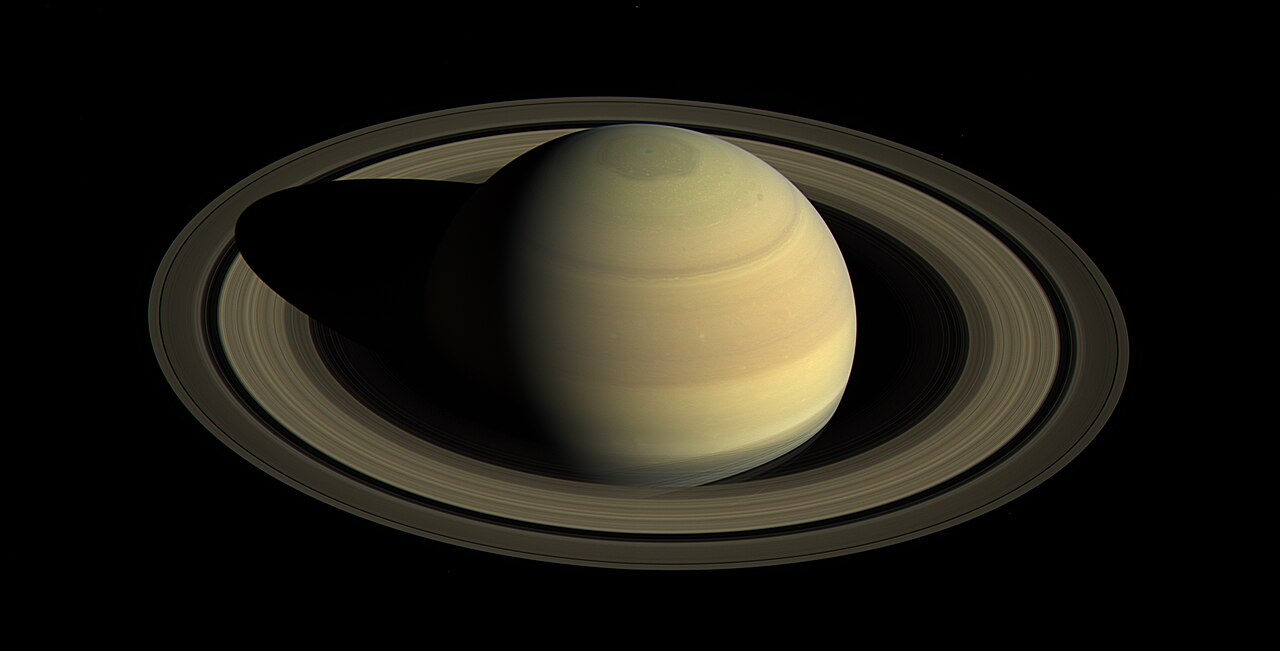
October belongs to Saturn. In NASA’s monthly “What’s Up” skywatching guide, the space agency walks viewers through the month’s highlights: Saturn reaching opposition on October 4, the Orionid meteor shower peaking on October 21–22, and the Moon’s close pass by the Pleiades star cluster on October 27–28.
Opposition is the ringed planet’s annual close-up — Earth passes between Saturn and the Sun, leaving Saturn lit face-on and visible for most of the night. NASA also highlights a curiosity Hubble recently revealed: a ten-sided atmospheric wave encircling Saturn’s south pole, a geometric oddity in the planet’s weather that the video explains in plain terms.
The Orionids are debris from Halley’s Comet, burning up as Earth crosses the comet’s old trail. This year’s display comes with an asterisk: a bright Moon will wash out the fainter meteors, so NASA’s advice is to watch in the hours before dawn, after moonset. The month closes with the Moon sliding past the Pleiades — the Seven Sisters — best seen looking east in the evening, and spectacular through ordinary binoculars.
Video: NASA (official YouTube channel). Media Rounds features this video with a summary for readers; the footage is embedded from the source channel and has not been downloaded or re-uploaded.