
The Oleshky ceasefire that takes effect on Tuesday will be judged not by the announcement, but by the mechanics of what happens next. A ceasefire in a town is not a single event. It is a sequence: guns fall silent, demining teams clear the roads, aid convoys move in, and civilians who want to leave are given safe passage out. Each step depends on the one before it, and each step can fail for reasons that have nothing to do with political will. A road that is not cleared cannot be used by a convoy. A convoy that cannot move cannot deliver aid. Civilians who do not trust the corridor will not use it, and a corridor that civilians do not use becomes a diplomatic fiction rather than a humanitarian achievement. The agreement, announced on Friday, opens humanitarian corridors for aid deliveries and civilian evacuations, with technical peace talks planned for the first half of November in Abu Dhabi. The ceasefire is set to begin at 4 a.m. local time on Tuesday, according to reports of the deal.
Demining, corridors and trust
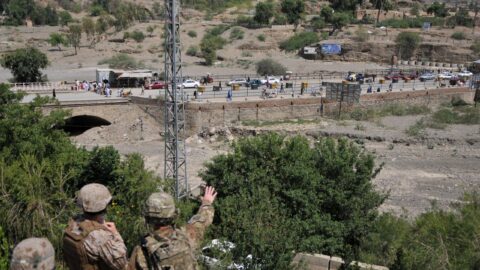
Demining is the least visible and most important part of the operation. Oleshky has lived under occupation and bombardment, and its roads, fields and buildings may contain mines and unexploded ordnance that make movement dangerous even when the guns are silent. Clearing those hazards takes trained teams, equipment and time, and it must happen while both sides hold fire, a fragile arrangement that can collapse with a single incident. Safe passage also requires trust, and trust is scarce in a town where civilians have lived under occupation. The involvement of United States First Lady Melania Trump in brokering the deal, as reported, may help with that trust, because it gives the corridor an external guarantor. But trust is ultimately built by experience: if the first convoys arrive safely and the first civilians leave safely, more will follow. If they do not, the corridor will close, not by announcement, but by disuse.
From a town to a negotiation
The broader question is whether a working corridor in Oleshky can lead to a broader negotiation in Abu Dhabi. Previous rounds of United States led talks stalled in February without significant progress, and the fundamental disagreement remains: Russia demands that Ukraine surrender the entire eastern Donbas, including territory it has not captured, while Kyiv rejects any proposal requiring it to give up territory it controls. A successful humanitarian operation does not resolve that disagreement, but it does prove that the two sides can agree on something and implement it, which is a precondition for any larger deal. The Oleshky ceasefire corridor report frames the test in those terms: whether the guns fall silent, whether demining teams can clear the roads, and whether the first aid convoys reach a population in urgent need. Those are practical questions, and they will be answered on the ground in Oleshky, not at a negotiating table in Abu Dhabi. The table matters later. The corridor matters now.