
NASA’s SpaceX Crew-13 mission to the International Space Station will carry a coordinated suite of human-health studies — examining everything from B-vitamin effects on blood vessels to the forces crews absorb at landing — as the agency builds the medical evidence base for Artemis lunar missions and an eventual Mars expedition, according to NASA’s description of the research programme. Some Crew-13 astronauts will take part in three additional investigations layered onto the mission’s standard measures.
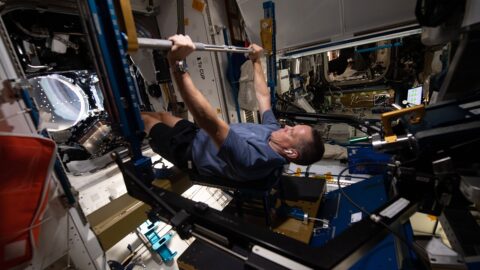
The architecture of the programme is as important as any single study. “Standard Measures” collects the same physiological and behavioral data from as many crew members as possible, flight after flight, building the baselines against which every countermeasure is judged. “Spacecraft Occupant Risk” characterizes the physical forces astronauts experience during landing, feeding hardware and strategy decisions to reduce injury risk — a study with immediate application as commercial crew vehicles multiply. “Zero T2” compares crew who use the station’s treadmill for aerobic exercise with those who do not, answering a question with real design stakes: future deep-space vehicles may be too small for a treadmill, and mission planners need to know what is lost if it is left behind.
The B-vitamin investigation illustrates the programme’s style — modest-sounding, mechanistically precise. Whether supplementation changes how blood vessels behave before and after flight touches circulation, vision changes and cardiovascular risk, three of the standing concerns of long-duration flight.
NASA’s human research chief framed the package plainly: together, the investigations show how the body responds to spaceflight and whether the strategies meant to protect it actually work, paving the way for the Moon base era and expeditions beyond.
Every Mars plan eventually becomes a medical plan. Crew-13 is where part of that plan gets its data.
The landing-forces study deserves particular attention from the commercial era’s newcomers. As more providers fly more body types in more vehicle designs, the question of what the human frame tolerates at touchdown — after months of deconditioning, on vehicles with novel seating and descent profiles — stops being a NASA specialty and becomes an industry standard waiting to be written. Crew-13’s data will feed it. That is the research programme’s deepest function: the station is no longer merely a destination but a standards laboratory, running the experiments whose results will be cited in certification hearings for spacecraft that have not yet flown. The crew launching this month are, among other things, the control group for the next thirty years.