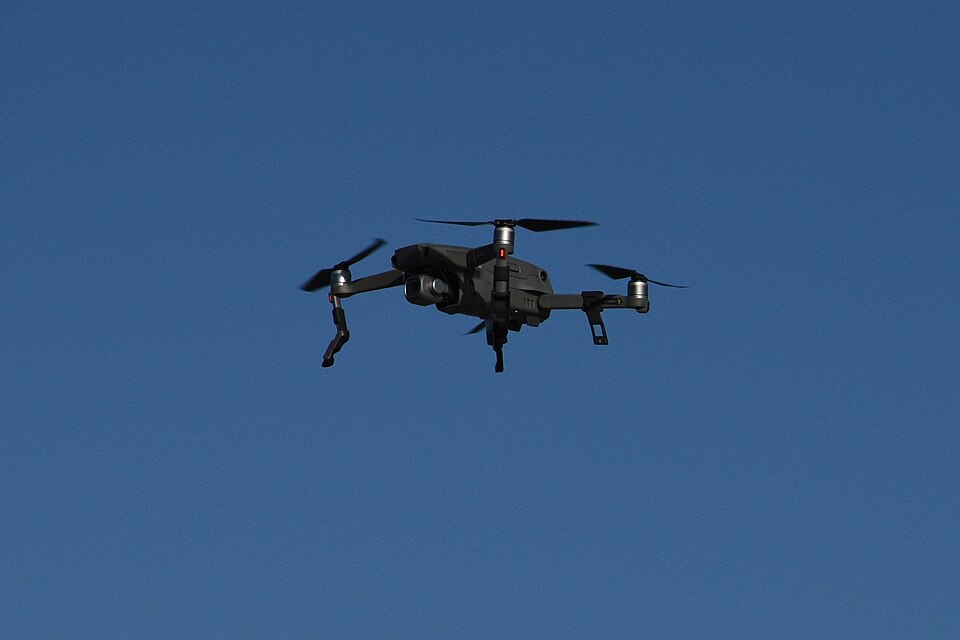
An estimated 6,000 law enforcement agencies across the United States fly drones for search and rescue, traffic investigations, crowd monitoring and tactical responses — and up to 90 per cent of them rely on equipment made by DJI, the Chinese manufacturer that dominates the global drone market, according to the Law Enforcement Drone Association (LEDA). As Washington tightens restrictions on Chinese drones, smaller, cash-strapped departments fear the rules could ground their fleets entirely.
The Trump administration has moved to reduce dependence on Chinese technology by banning many new foreign-made drones from entering the American market and imposing tariffs of 15 to 100 per cent on certain imported drones, NPR reported on 12 October.
The Federal Communications Commission has placed DJI and other foreign drone makers on its Covered List, barring new models from import and sale, while a June executive order aims to accelerate domestic drone manufacturing. Critics of the crackdown argue the American industry cannot yet match Chinese drones on affordability, availability or performance.
A $29,000 drone package against a three-times pricier alternative
The Ocean County, New Jersey, Sheriff’s Office illustrates the financial strain. Its fleet of 25 DJI drones costs about $29,428 per fully equipped package and has improved officer safety, assisted in water rescues and helped monitor large crowds. Kevin Fennessy, who oversees the department’s drone programme, estimates comparable American-made equipment would cost roughly three times as much — a gap most local budgets cannot bridge. The pressure comes as technology costs bite elsewhere too: PC shipments plunged 22.4 per cent in the third quarter as memory and hardware prices rose.
Support for US manufacturing, but not at the cost of lives saved
LEDA supports building the American drone industry, but warns that cutting access to affordable Chinese equipment before viable alternatives exist could force departments to scale back or eliminate programmes that are saving lives. “We’re seeing lives being saved with the use of this technology,” said LEDA head Jon Beal. “What that’s going to do is cancel out perfectly viable drone programs that are doing great work out there. We don’t want to cut off our nose to spite our face.”
Federal pressure is mounting: a National Defense Authorization Act deadline now bars new DJI imports unless a security review is completed, and federal grant rules increasingly demand NDAA-compliant equipment. Regulators elsewhere are tightening technology oversight too — the UK’s data watchdog recently secured commitments from ten major AI developers.
For the thousands of agencies flying today, the question is whether American factories can catch up before the affordable options disappear. A federal judge has already upheld the NDAA restrictions, making the transition to domestic hardware a matter of when, not whether.